Here's an engaging story inspired by a true case to answer a key question for successful business owners:
If your company’s ownership records are incomplete or informal,
what would stop someone from later claiming they own or control the business?
The Business That Won in Court and Still Lost
Incomplete ownership records can create uncertainty when a business owner needs to prove who controls the company.
Everyone in Somerville knew Park Street Provisions for two things: excellent sandwiches and a front door that stuck every time it rained.
The business sat two blocks from the courthouse, which meant the lunch rush was a mix of paralegals, contractors, real estate agents, and men in suits loudly saying, “I’ll call you right back,” while ordering turkey on rye.
The owner, Marty Klein, loved that place like a third child.
He knew which delivery driver needed coffee before conversation. He knew which freezer made the suspicious clicking sound. He knew the exact angle required to close the register drawer without slamming it.
What Marty did not know, unfortunately, was where the company’s original ownership records were.
That had never seemed urgent.
When Park Street Provisions was formed, Marty and his old friend Danny Russo had moved fast. Marty had the money. Danny had restaurant experience. They filed the company, opened the bank account, signed the lease, bought used equipment from a deli in Edison, and started selling sandwiches before the floor tiles were fully dry.
Marty said, “Definitely. We’ll do that right after opening.”
Every business owner knows what that means.
They did not.
For years, nobody cared. The business grew. The lunch line got longer. A catering contract with a local hospital turned into steady money. The stuck front door became “part of the charm,” which is what people say when they do not want to pay a contractor.
Then Danny left.
He said he was tired, wanted something quieter, and was moving down the shore. Marty bought him out with a handshake, a check, and a conversation both men later remembered differently.
Five years later, a regional café group offered to buy Park Street Provisions.
That was when Danny resurfaced.
He walked in on a Tuesday morning, not during the lunch rush, which Marty later admitted was the only considerate thing about the visit. Danny ordered nothing, sat at the small table by the soda fridge, and slid a folder across to Marty.
Inside was a written consent that supposedly showed Danny had been issued 40% of the company’s stock years earlier, along with a stock ledger listing him as a stockholder with voting rights. The buyout check, Danny now claimed, had only covered “back pay.” Marty, he said, had no right to sell the business without him.
Marty laughed.
His lawyer did not.
By the end of the week, the buyer had paused the deal.
By the end of the month, the buyer was gone.
Just a polite email saying they had decided to “pursue other opportunities,” which Marty understood to mean, “We are not buying a lawsuit with a sandwich counter attached.”
After that, it was no longer about the sale.
It was Marty’s lawyer, Danny’s lawyer, and a fight over who actually had the right to control the company.
Danny’s lawyer demanded the company’s formation records, ownership ledger, written consents, buyout agreement, and minutes approving the ownership change.
Marty had some things.
He had tax returns. He had bank statements. He had old emails. He had a scanned copy of a check with “final payment” written in the memo line, which helped, but did not exactly do the job of a signed buyout agreement.
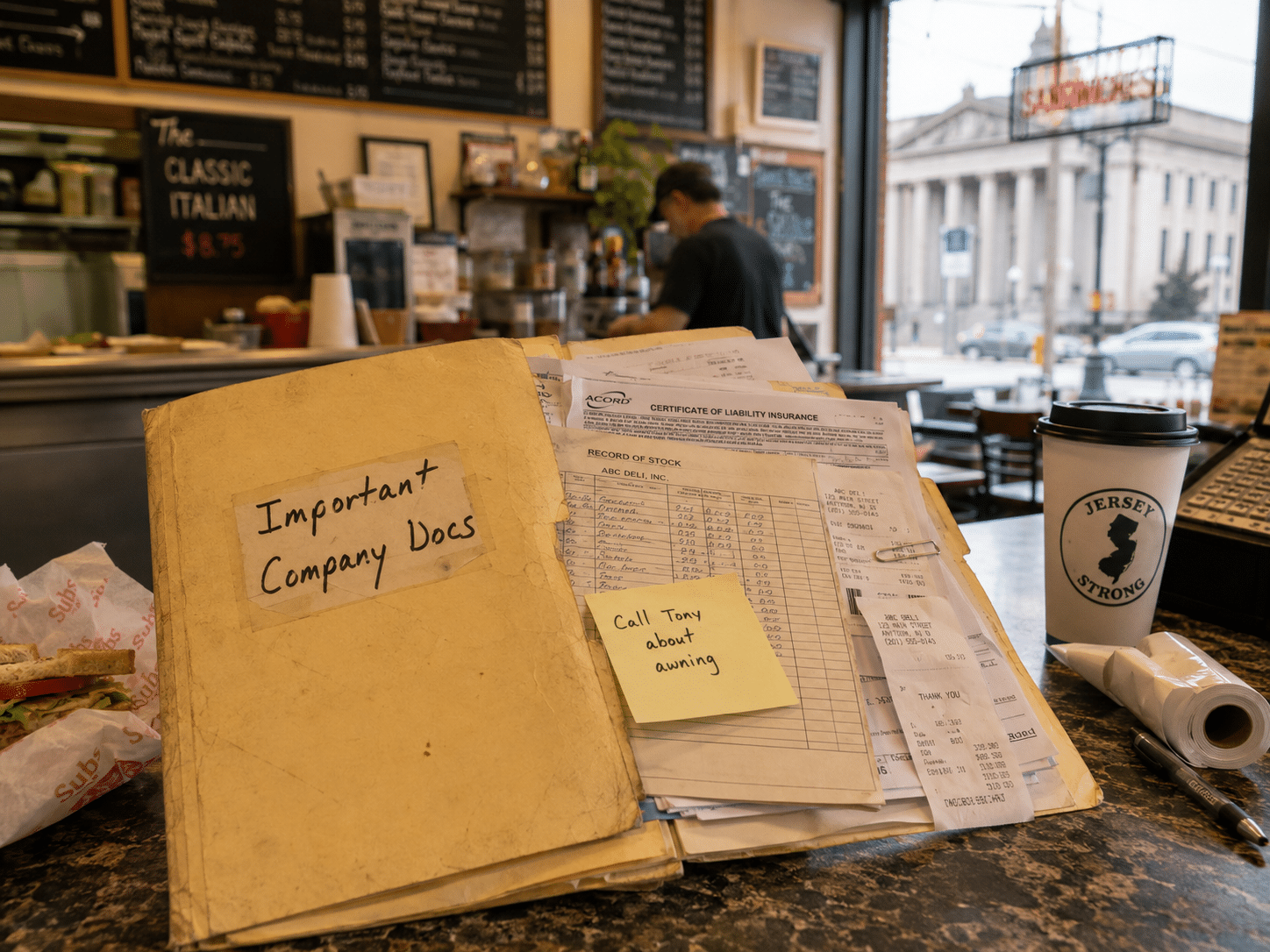
He also had a folder labeled “Important Company Docs.”
Inside were two insurance certificates, an expired grease-trap inspection, and a handwritten note that said, “Call Tony about awning.”
Not ideal.
Fortunately, Danny’s story did not hold up.
His document had problems. The dates did not line up. The signature looked suspicious. An expert picked it apart. Old messages showed Danny repeatedly describing himself as “out of the business.”
Eventually, the judge ruled against him.
Marty won.
Technically.
But by then, the buyer was gone. The deal that had started the whole mess had disappeared, and no one was sending another offer letter just because Marty finally proved he was right.
The lawyers had been paid. The employees had heard rumors. Vendors had started asking careful little questions that began with, “Everything okay over there?”
And Marty had spent months doing something no business owner wants to do: paying attention to litigation instead of the business.
After the case, he stood behind the counter one quiet Tuesday, watching a young employee wrestle with the front door.
“Lift it first,” Marty said. “Then pull.”
The employee did.
The door opened.
Marty shook his head.
“That door has better instructions than my company had.”
The bad claim failed. Danny did not get control. But Park Street Provisions still paid a price.
Takeaway for Business Owners
A false ownership claim does not have to win in court to hurt the business.
It only has to sound possible long enough for the buyer to walk away, the owner to lose focus, and the company to spend months proving something that should have been clear from the start.
When the records are loose, missing, unsigned, or scattered across old emails and half-forgotten folders, the business creates an evidentiary vacuum. And if the business becomes valuable enough, someone may try to fill that vacuum with a better story.
This story is based on a real court case, with names and details modified for clarity and confidentiality. The legal principles remain the same, providing important lessons for business owners facing similar situations.
Are you wondering about any of the issues mentioned above? Please email us at info@wilkinsonlawllc.com or call (732) 410-7595 for assistance.
At Wilkinson Law, we give business owners the clarity they need to fund, grow, protect, and sell their businesses. We are trustworthy business advisors keeping your business on TRACK: Trustworthy. Reliable. Available. Caring. Knowledgeable.®