New Jersey Independent Contractor Law: NJDOL Adopts Final ABC Test Rules for Worker Classification
New Jersey businesses that use independent contractors should review those relationships before October 1, 2026. The New Jersey Department of Labor and Workforce Development has adopted final regulations explaining how it applies the ABC test when determining whether a worker is an employee or independent contractor.
The ABC test itself is not new, but the regulations provide more detailed guidance on the factors NJDOL will consider. A business must establish all three parts of the test to support independent contractor status, and a Form 1099 or independent contractor agreement alone is not enough.
This guide explains what the new rules mean and what your business should review now.
How Does the ABC Test Determine Whether a Worker Is an Employee or Independent Contractor in New Jersey?
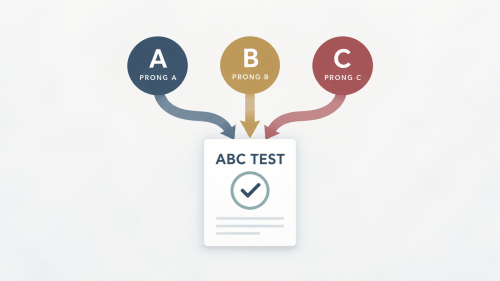
Under NJ law, a worker who performs services for compensation is presumed to be an employee unless your business can establish all three parts of the ABC test. Passing one or two is not enough.
The test looks beyond the title you give the worker and examines how the relationship actually operates. Each prong of the ABC test asks a different question about the worker’s independence from your business.
Prong A: Is the Worker Free From Your Business’s Control or Direction?
Prong A focuses on how much control your business has over the worker and the services they perform.
The new NJDOL regulations identify several factors that may matter, including whether your business:
- Requires the worker to work set hours or jobs
- Controls how the services are performed
- Requires the worker to perform the services personally
- Negotiates and acquires the worker's services
- Fixes the worker’s rate of pay
- Places the risk of loss on the worker
- Requires the worker to be available at particular times
- Limits the worker’s ability to perform services for others
- Provides training
The list is not exhaustive. NJDOL may consider other facts about the relationship as well.
Prong B: Is the Work Outside Your Business’s Usual Course or Places of Business?
Prong B looks at the relationship between the contractor’s work and your company's operations.
Your business can satisfy this part of the test if the work is either:
- Outside your usual course of business
- Performed outside all of your places of business
The new regulations explain that your usual course of business may include activities your company regularly performs to generate revenue or to develop, produce, sell, market, or provide its goods or services. A company may have more than one usual course of business.
That makes the nature of the contractor’s work important.
For example, a dental practice hiring a plumber to repair a pipe presents a very different situation from a company hiring a contractor to perform the same type of service the company sells to its customers.
The regulations also address remote work. A worker’s personal residence where the worker performs remote work is not considered a place of business operated by your company.
That does not, however, mean a remote worker automatically qualifies as an independent contractor. Your business still has to satisfy Prongs A, B, and C.
Prong C: Does the Worker Have a Genuinely Independent Business?
Prong C asks whether the worker is customarily engaged in an independently established trade, occupation, profession, or business that exists apart from their relationship with your company.
NJDOL may consider facts such as:
- How long the worker’s business has existed and whether it is viable
- How many customers the business has and the volume of work from each customer
- How much of the worker’s business comes from your company compared with other customers
- Whether the worker has employees
- Whether the worker invests in their own tools, equipment, vehicles, infrastructure, or other resources
- Whether the worker sets their own rates
- Whether the worker advertises or otherwise makes their services available in the market
One particularly useful question for a business owner is:
Would this worker still have a functioning business if your company stopped using their services?
Does a Form 1099 or Independent Contractor Agreement Establish Independent Contractor Status?
No. Issuing a Form 1099 or having a worker sign an independent contractor agreement does not, by itself, establish independent contractor status under New Jersey law.
The same is true if the worker has an LLC, business registration, professional license, insurance, or other customers. Those facts may be relevant to the classification analysis, but none automatically makes the worker an independent contractor.
NJDOL looks at the actual relationship between your business and the worker. That means an agreement calling someone an independent contractor will not resolve the issue if, in practice, the relationship does not satisfy all three parts of the ABC test.
What Are the Consequences of Independent Contractor Misclassification in New Jersey?
Misclassifying an employee as an independent contractor can create obligations that your business may not have accounted for while treating that worker as a contractor.
Depending on the circumstances, the business could face claims or liability involving unpaid wages or overtime, state tax withholding, unemployment or temporary disability contributions, earned sick leave, penalties, interest, or other employment-related obligations. Misclassification can also lead to NJDOL audits or employee and independent contractor disputes, including lawsuits brought by workers challenging how they were classified.
The consequences can extend beyond changing how the worker is paid going forward. If the worker should have been treated as an employee during the relationship, the business may have to address obligations that arose while the worker was incorrectly classified.
That is why worker classification is more than a choice between issuing a Form W-2 or Form 1099. The classification can affect wage-and-hour compliance, payroll obligations, employee leave, required contributions, and the business’s exposure to enforcement or litigation.
What Should New Jersey Businesses Do Before October 1, 2026?
Start with the workers your business currently classifies as independent contractors. For each relationship:
- Review the relationship under all three parts of the ABC test. Consider the control your business exercises, how the worker’s services relate to your usual course of business, and whether the worker operates a genuinely independent business.
- Compare the agreement with what actually happens. A contract may describe the worker as independent, but your day-to-day practices may tell a different story. Look at how the person is actually paid, supervised, scheduled, trained, and permitted to work for others.
- Identify classifications that are difficult to support. Pay particular attention when your business exercises significant control, the contractor performs work central to what your company provides, or the worker appears economically dependent on your relationship.
- Determine whether changes are appropriate. If the facts do not support independent contractor status under all three prongs, consider whether the relationship, its documentation, or the worker’s classification needs to be addressed.
How Can a Lawyer Help Your Business Review Worker Classification?
A lawyer can help your business review whether its independent contractor relationships are supported by the facts, not just by the agreements or tax forms you use. That can include evaluating each relationship under the ABC test, comparing your written agreements with how the work actually happens, and identifying classifications that may be difficult to support.
If a potential problem is identified, counsel can also help determine what should change. Depending on the circumstances, that may involve changing how the relationship operates, reconsidering the worker’s classification, and revising the agreement to reflect the actual relationship before the issue leads to a claim, audit, or other dispute.
Meet Our New Jersey Business Attorneys
Wilkinson Law’s business attorneys help New Jersey business owners understand legal risks, evaluate their options, and make informed decisions about how they operate and protect their businesses.
Anthony Wilkinson
Anthony Wilkinson brings a business-law and finance perspective to matters involving contracts, ownership, intellectual property, financing, and other commercial relationships. He helps business owners understand how legal decisions affect their companies and broader business goals.
Daniel Bitonti
Daniel Bitonti has more than 20 years of legal experience and helps business owners with matters involving contracts, raising capital, acquisitions, business disputes, and other commercial issues. His experience includes litigation in state and federal courts and appearances before New Jersey administrative bodies.
Are you wondering about any of the issues mentioned above? Please email us at info@wilkinsonlawllc.com or call (732) 410-7595 for assistance.
At Wilkinson Law, we give business owners the clarity they need to fund, grow, protect, and sell their businesses. We are trustworthy business advisors keeping your business on TRACK: Trustworthy. Reliable. Available. Caring. Knowledgeable.®